GFSI-Compliant Integrated Pest Management (IPM) & Chemical Safety
An advanced overview of systemic pest exclusion, physical bait station mapping, and the extreme chemical hazards of loose rodenticides inside food facilities.
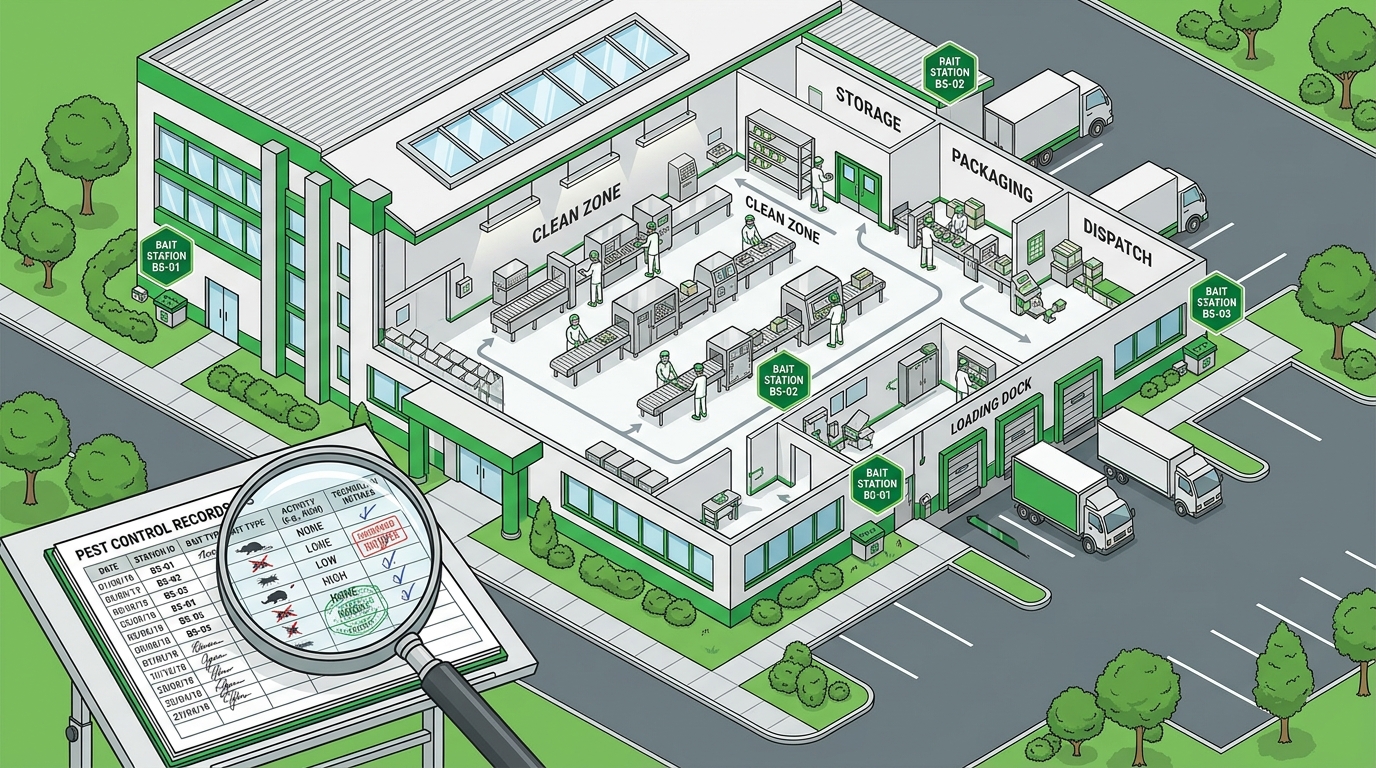
1. The Evolution from Pest Control to Integrated Pest Management (IPM)
Traditional pest control focused on reactive chemical spraying after infestation occurs. Modern food safety standards (GFSI, NFSA) mandate Integrated Pest Management (IPM), a proactive, ecological approach. IPM prioritizes physical exclusion (Pest Proofing) like sealing gaps, installing air curtains, and maintaining sound physical thresholds. Chemical application is treated as a last resort, strictly controlled to prevent biological and chemical contamination of food contact surfaces.
2. The Critical Hazard of Loose Chemical Rodenticides
Placing loose rat poison, anticoagulant chemical blocks, or toxic powders outside locked, tamper-resistant bait stations is a critical food safety violation. Rodents do not consume chemical bait in place; they carry it away, which can lead to bait dropping directly into food preparation containers, storage racks, or kitchen utensils. Accidental ingestion of anticoagulant rodenticides causes severe internal hemorrhaging in humans and presents a catastrophic biological/chemical intoxication risk.
3. Mandatory Documentary Verification for Pest Compliance
During a food safety audit, compliance is verified through documentation. The auditor checks: 1. Specialized contractor contract and valid official license. 2. Safety Data Sheets (SDS/MSDS) for all chemicals applied. 3. Detailed Bait Station Map showing exact location and numbering of bait boxes and traps. 4. Daily and monthly service logs detailing chemicals used, concentration, and contractor sign-off. Missing documents imply lack of control and lead to system failure.
Want To Apply This To Your Facility?
Contact us to turn these concepts into a field assessment and a practical action plan.
Contact Us