Systemic Cross-Contamination Barriers and Allergen Separation Architecture
An in-depth technical guide on raw vs. ready-to-eat physical separation, cutting board ergonomics, and strict labeling protocol to eliminate pathogen transfer vectors.
1. Thermodynamics of Separation: Raw vs. Ready-to-Eat (RTE) Storage
Storing raw animal proteins (such as raw salmon, meat, poultry) in the same cabinet or freezer with ready-to-eat items (like bread or cooked sauces) represents a severe biological hazard. Liquid drip from thawing raw meats contains high loads of Salmonella, Campylobacter, and Escherichia coli. Freezing does not kill pathogens; it only suspends replication. In shared storage, microscopic transfer via air currents, hands, or condensation dripping can occur. Complete physical segregation in separate freezers is the gold standard; if shared storage is unavoidable, raw items must go below ready-to-eat items with solid dividers.
2. Color-Coded Cutting Board Stands and Hygiene Hygiene Management
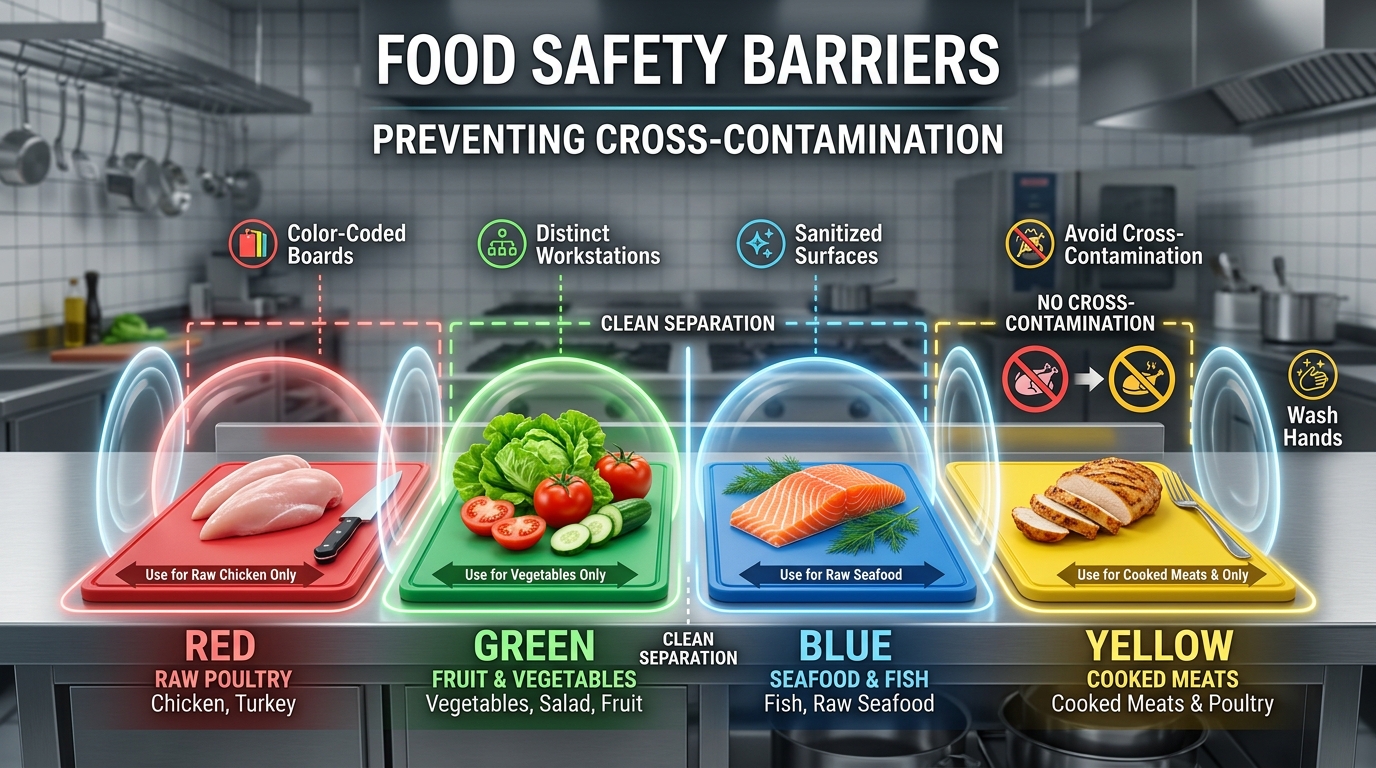
Food contact surfaces must be kept clean, sanitized, and dry. Wet cutting boards stacked horizontally create a warm, dark, humid microenvironment between the boards that acts as a perfect media for rapid bacterial proliferation. Color coding (Red for raw meat, Yellow for raw poultry, Blue for seafood, Green for vegetables/fruits, White for dairy/RTE) must be paired with dedicated vertical drying stands that ensure airflow between the boards, maintaining complete dryness and preventing moisture accumulation.
3. Open Container Expiry Protocol & Shelf Life Calculations
When a food container (like syrup bottles, fresh juices, sauces) is opened, its sterile seal is broken, exposing it to environmental pathogens and oxygen. Tracking expiration requires two dates: the manufacturer expiry and the Open Expiry (Secondary Shelf Life). fresh raw juices and sauces degrade within 48 to 72 hours under refrigeration. Audit compliance mandates that every open container displays a label indicating: Date of Opening, and calculated Expiry Date. Unlabeled items are treated as expired and present high toxicity risk.
Want To Apply This To Your Facility?
Contact us to turn these concepts into a field assessment and a practical action plan.
Contact Us